Portfolio Allocation: The Math Behind the Efficient Frontier
Master the quantitative core of Modern Portfolio Theory. Learn how to use Markowitz optimization and Python to build an efficient frontier for asset allocation.
Explore structured guides on computer architecture, operating systems, systems programming, Python data science, Rust and quantitative finance.
Master the quantitative core of Modern Portfolio Theory. Learn how to use Markowitz optimization and Python to build an efficient frontier for asset allocation.
Master the 6-step framework for data wrangling. Learn to handle missing values, remove outliers using IQR, and validate data quality using Python and Pandas.
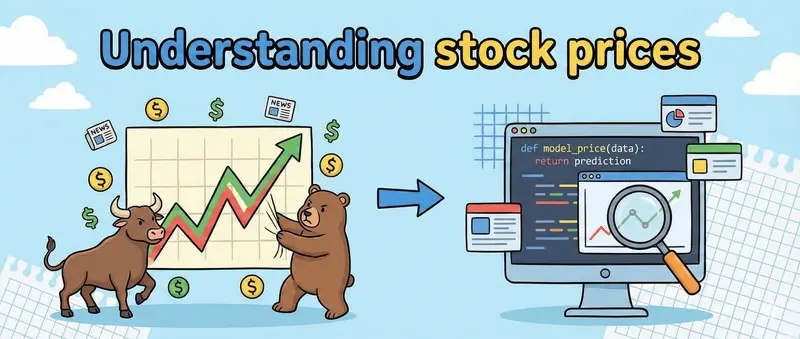
Learn how to analyze stock market data using Python. This guide covers calculating daily returns, visualizing volatility, and modeling statistical distributions with yfinance.
Master your Data Science workflow. A step-by-step tutorial on setting up VS Code, Python virtual environments (venv), and Google Colab for professional analysis.
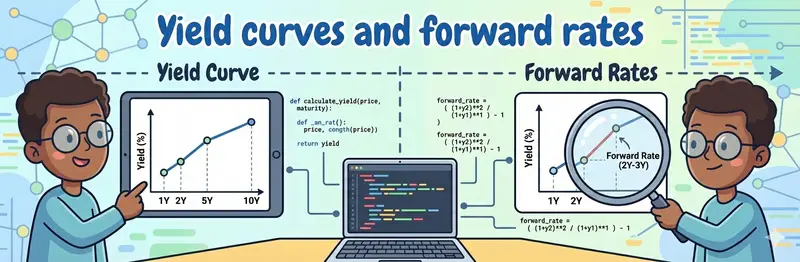
Master the term structure of interest rates. Learn to build yield curves using bootstrapping and interpolation, and derive forward rates with practical Python examples.
Discover how CPUs talk to the outside world. Learn about memory-mapped I/O, DMA, the role of GPUs in parallel processing, and modern System-on-Chip (SoC) design.
Learn how CDO tranching splits credit risk into Senior, Mezzanine, and Equity layers — with a step-by-step Python waterfall simulation.
The grand finale of our architecture series. Follow a step-by-step walkthrough of the Fetch-Decode-Execute cycle to see how the ALU, Control Unit, and Registers create a thinking machine.
A quantitative guide to loan amortization and bond pricing. Learn to derive payment formulas, simulate default risk, and understand coupon rates using Python.
Master the computer memory hierarchy. Learn the critical differences between L1/L2/L3 cache, RAM, and SSDs, plus how the MMU handles virtual-to-physical address translation.
Master risk management through the lens of variance and expected value. Learn how to size bets, diversify risk, and implement decision-making logic in Python.
Discover how the Control Unit (CU) orchestrates the CPU. Learn the mechanics of instruction decoding, hardwired vs. microprogrammed logic, and the role of microcode.